
Snooker is an exciting cue sport combining skill, patience, and strategy. Beginners who wish to start enjoying this game quickly should learn its basic rules, scoring system and table layout as quickly as possible in order to play confidently and enjoy it more fully.
Introduction
Snooker may appear daunting at first, but once you understand its mechanics it becomes much simpler. Played on a large table, with six pockets, and including a white cue ball, 15 red balls, six colored balls with different point values, and six colored cue balls (cue balls are not used in this game).
Snooker's primary aim is straightforward: score more points than your opponent by potting balls in their proper order. Once you understand its fundamentals, however, snooker becomes an exercise in planning, control and accuracy rather than simply pocketing balls.
What Is Snooker?
Snooker is a precision-based cue sport played between two or more players or teams of two. This popular pastime can be found at clubs, tournaments and recreational centers as it challenges both physical and mental skill.
Snooker is played on a larger than pool table table, which makes shot selection and cue control paramount to success. Snooker rewards patience over speed or power when played correctly.
Snooker Table Basics
A standard snooker table features six pockets - one in each corner and one near the middle of each long side - covered by green baize for playing surface and balls being placed at specific spots at start of frame.
The cue ball is the only object you strike directly with a cue, with 15 red balls arranged in a triangle on a table surface, as well as additional colored balls placed at specific spots on its surface.
Here is the typical ball setup:
Snooker Rules To play Snooker, one must first pot one red ball before proceeding with colored ones until all 15 reds have been potted and eliminated from the table. Snooker Rules Generally speaking, players must first pot a red ball before moving onto colored ones - this process must continue until all 15 red balls have been potted off of the table.
Once a red is potted, players can attempt any color ball. When this attempt fails, its position will be reinstated during the red-and-color phase while its counterpart remains off of the table.
Once all red balls have been eliminated, their counterparts must be potted in an ordered fashion:
Yellow: Failing to pot legal balls or commit an illegal foul results in points being awarded against that player by their opponents. Fouls play an integral part of snooker rules and can dramatically change the result of any given frame quickly.
Scoring in Snooker
Scoring for Snooker is determined by evaluating each ball as individual points - red balls count for one point each while other colored ones hold higher values.
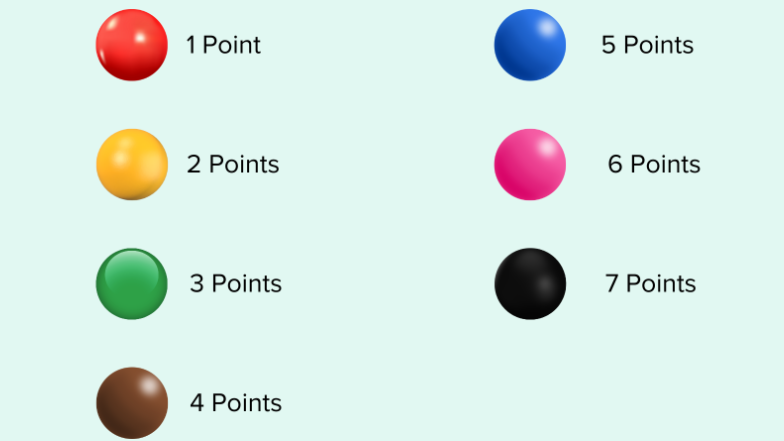
To successfully score, a common scoring sequence involves potting first a red, then any color, then another red, followed by another color - usually Black being the highest value ball after which to pot after potting reds.
Snooker players commonly aim for a 147 break, which is the maximum break possible in one frame. It involves potting 15 reds with 15 blacks before clearing all six colors consecutively.
Beginners typically encounter some key snooker terms that should be known, including:
Frame 1: One complete game of Snooker
Break: The sum of all points scored during one visit to the table.
Pot: To put a ball into an appropriate pocket.
Cue ball: This white ball serves as the target you strike.
Safety shot: An offensive technique intended to make the next shot more challenging for an opponent.
Foul: Any rule violation which awards points to another player.
Gaining knowledge of these terms makes it easier to follow matches and learn from other players at the club.
Beginner Tips
If you are new to snooker, emphasize consistency before trying more complex shots. A solid stance, smooth cue action, and accurate aim matter more than power when it comes to playing successful snooker shots.
Here are a few useful beginner tips:
Begin with simple straight shots.
Practice cue control and follow-through.
Figure out where your cue ball should land after every shot.
Watch how experienced players strategize their next move.
Avoid taking unnecessary risky shots early in the game.
Spend as much time practicing the fundamentals as you can; your game will improve rapidly as a result.
Why Snooker Is an Excellent Game
Snooker can provide both entertainment and mental development benefits for players of all ages; whether for casual fun or competitive play.
Snooker is an enjoyable social sport. Many players love its combination of recreation and healthy competition in an unintimidating club environment.
Conclusion
Snooker is an enjoyable sport to start playing but difficult to master, making it an engaging challenge. Once you understand its rules, scoring and table basics, you can start enjoying every game as your skills increase through practice and matches.
Beginners should start off by learning the fundamentals, practicing regularly and gradually building confidence step by step. Snooker requires patience, accuracy and smart thinking - qualities which make this sport worthwhile learning properly.
FAQ
What is the first legal ball to pot in Snooker? In general, red balls are used for first legal pots.
How many points is a black ball worth? A black ball is worth seven points.
What is a Frame in Snooker? A frame refers to one complete game of snooker.
What is the maximum break in Snooker?
The maximum break for snooker is 147. Is snooker more challenging than pool? Snooker tends to be considered more difficult due to its larger table and more complicated scoring rules, but both games can be found fun to play!